
- Garfield AI is the UK's first SRA-regulated AI law firm (authorised May 2025). It won a £7,000 case at Wandsworth County Court on 14 May 2026.
- The AI handled document disclosure, witness statements and trial prep. The courtroom advocacy was done by a human barrister (Dominic Li, One Essex Court).
- The SRA explicitly forbids Garfield from proposing case law — hallucinations are flagged as "high risk". Liability stays with the human solicitors.
- The claimant paid ~£400 for Garfield's work to recover £7,000. That's the economic punchline — not "AI replaces lawyers".
On 14 May 2026, Garfield AI won a £7,000 claim at Wandsworth County Court in London — the first SRA-regulated AI law firm in the UK. "First AI law firm wins court case" has been the headline ever since, around the world. The headline is technically correct. It cuts off, though, at exactly the point an operator should look hardest.
Who was actually in court? What did the AI really do? And which clause in the regulator's authorisation is the most important line in this whole story?
What actually happened (and what the headline leaves out) #
The facts of the case are mundane. Tamires Camal Taquidir, a freelance HR consultant, had billed a hospitality business for work delivered. £7,000 went unpaid. Claims of this size are rarely worth pursuing in the UK — the lawyer costs more than the debt.
Instead she instructed Garfield AI, the UK's first AI-driven law firm authorised by the Solicitors Regulation Authority since May 2025. Garfield handled the preparation: document disclosure, witness statements, trial prep — exactly the paperwork that swallows most of a case's legal fees.

The trial went ahead at Wandsworth County Court on 14 May 2026 and lasted three hours. The court found in favour of the claimant — full amount plus the counterclaim dismissed.
The claimant's spend on Garfield: around £400. The other side: solicitor plus barrister, likely four to five figures. Awarded claim: £7,000. Counterclaim: dismissed.
So far so straightforward. Here's where most headlines stop.
Who stood in court — and who didn't #
Garfield AI did not argue the case in front of the judge. Standing in court was Dominic Li, barrister at One Essex Court — a human. Both sides had barristers. Garfield's AI did the preparation; Li did the advocacy.
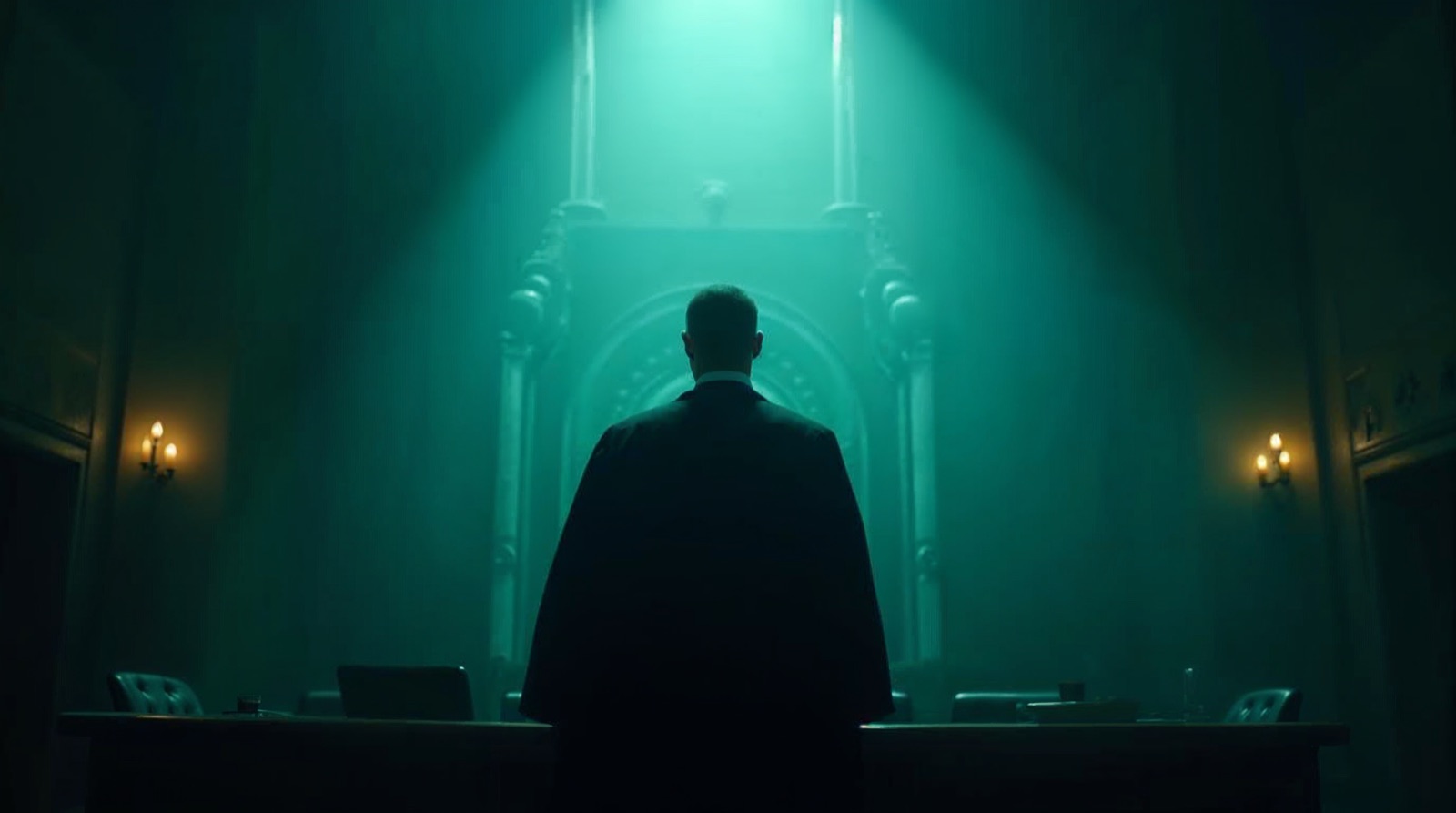
"First AI law firm wins court case" is technically right. The mandate was Garfield's, the work was Garfield's, the result was Garfield's. But the mental image the headline builds — an AI talking a judge through its argument — is wrong. What actually happened is closer to an automated back office with a human front man.
The difference sounds small. Operationally it's huge.
Not a Garfield problem — a pattern #
What you're seeing here in condensed form is the structure underneath almost every serious AI deployment in a regulated industry right now. AI does most of the work. A human carries the responsibility and stands in the spotlight.
You see the exact same pattern in:
- Marketing — AI generates the drafts, the director's name sits on the byline.
- Compliance — AI scans 50,000 contracts, the lawyer signs off the review.
- Audit — AI flags anomalies, the auditor signs the opinion.
- Medicine — AI segments the CT, the radiologist makes the diagnosis.
If you're surprised by Garfield, you should be just as surprised by your own setup. It's the same supply chain, dressed differently.
Where does AI do the work in your stack — and who carries the liability?
I help teams in regulated industries draw the line cleanly: what the AI is allowed to do, where a human must stay, who is liable. 90-min discovery call, free.
The accountability punchline — the most important line in this story #
The Solicitors Regulation Authority authorised Garfield in 2025 with conditions, and those conditions are the real lesson. Three of them are hard:
- Garfield's AI is not allowed to propose case law. No case-law lookup served up to the client. The SRA's stated reason: hallucinations are "high risk", in those exact words.
- Every step needs a human sign-off. The client has to actively approve at each stage — workflow gating, not "autonomous".
- Liability stays 100% with the human solicitors. If something goes wrong, humans are on the hook — not the company, not "the AI".
These three lines aren't legal trivia. They are the architecture that lets a regulated industry permit AI at all. Without them, Garfield wouldn't have been authorised.
And exactly this architecture is missing from 90% of the AI pitches I read on LinkedIn.
What this means for you as an operator #
If you're in a regulated industry — and that's more of you than you think: fintech, health, public sector, law, tax, pharma, energy — the Garfield story is your cheat sheet. Four questions I put to every team that wants to deploy AI in a regulated context:
- What's your SRA? Who is the regulator that ultimately sits over you, and do you know what they actually expect of AI? At epay, that's the BaFin plus the local financial regulators in every market. For you it might be a medical board, a telecoms authority, a TÜV-style certifier. That list has to be on the table before any model goes near production.
- Which piece are you explicitly forbidding the AI from doing? Garfield is not allowed to propose case law. What's your equivalent? No final risk decision? No autonomous pricing approval? No customer segmentation without review? If you can't say it in one sentence, you haven't thought your guardrails through.
- Where do the human quality gates sit? Garfield requires sign-off at each step. If your AI runs "end-to-end" with no human checkpoints, you don't have a compliance problem — you have an architecture problem.
- Who is liable when the AI hallucinates? If the answer is "the AI" or "the vendor", it's wrong. Liability always sits with a human or an organisation. If you don't know who, either you haven't read the contract — or there isn't a real answer in it.
These four questions aren't compliance theatre. They're what makes the difference between Garfield's press release and Garfield's malpractice case. Put them to your AI vendor in that order — and watch which question makes them stumble. That's exactly where your risk is.
My take #
The Garfield story will surface in countless pitches over the next few weeks, mostly distorted: "AI replaces lawyers", "first ever human vs AI", "justice disrupted". None of that is true. What's true is more sober and at the same time more important: AI makes routine legal work economically accessible that wasn't accessible before. £400 instead of £4,000 to recover £7,000 — that changes what you take to court in the first place.
This is real democratisation — not because an AI is smarter than a lawyer, but because it's cheap enough that small claims suddenly become worth pursuing. — Operator note
That economic line has been the invisible boundary for decades. It's coming down now.
But the architecture that makes this work isn't "AI does everything". It is: AI does the work, the human carries responsibility, the regulator draws the lines. Every serious AI project in a regulated industry needs all three layers — otherwise it either won't get approved or it will fall apart on the first incident.
Related pattern, written two weeks back: the Pokémon Go and Vantor story is the same supply chain seen from the other side — incidental data that no one had a military drone AI in mind for. → 30 billion Pokémon Go scans that ended up in a military AI.
FAQ
Did an AI really win a court case in the UK?
Yes and no. Garfield AI, an SRA-regulated AI law firm, won a £7,000 claim at Wandsworth County Court on 14 May 2026. The AI handled the files, statements and preparation — but a human barrister (Dominic Li, One Essex Court) did the courtroom advocacy. The headline "AI wins court case" is technically right but leaves out the decisive part.
What is Garfield AI allowed to do under the SRA — and what isn't it?
The Solicitors Regulation Authority authorised Garfield in 2025 with strict conditions: preserve client confidentiality, avoid conflicts of interest, get human sign-off at every step, and crucially: the AI is NOT allowed to propose case law. Hallucination risk was explicitly flagged as "high risk". Liability stays with the human solicitors.
What does this have to do with small claims?
The claimant paid about £400 to Garfield AI to recover £7,000 — the other side had a solicitor and a barrister. Claims below £10,000 have rarely been worth chasing economically. AI law firms move that threshold downwards.
What should a business take away from this story?
Apply the same test to every AI headline: what did the AI actually do, what didn't it, and who carried the liability? With Garfield: back office yes, courtroom no, liability with the solicitor. Every operator needs to draw exactly that line in their own stack.